By Hernandez Roofing Pros · Updated 2026
Your siding does more than shape your home’s curb appeal — it’s the first line of defense against wind, rain, and temperature swings, and it plays a real role in your energy bills. This guide walks through the siding materials we install and repair most often in Maryland and Northern Virginia, the warning signs that mean it’s time to call someone, and how to decide between a repair and a full replacement.
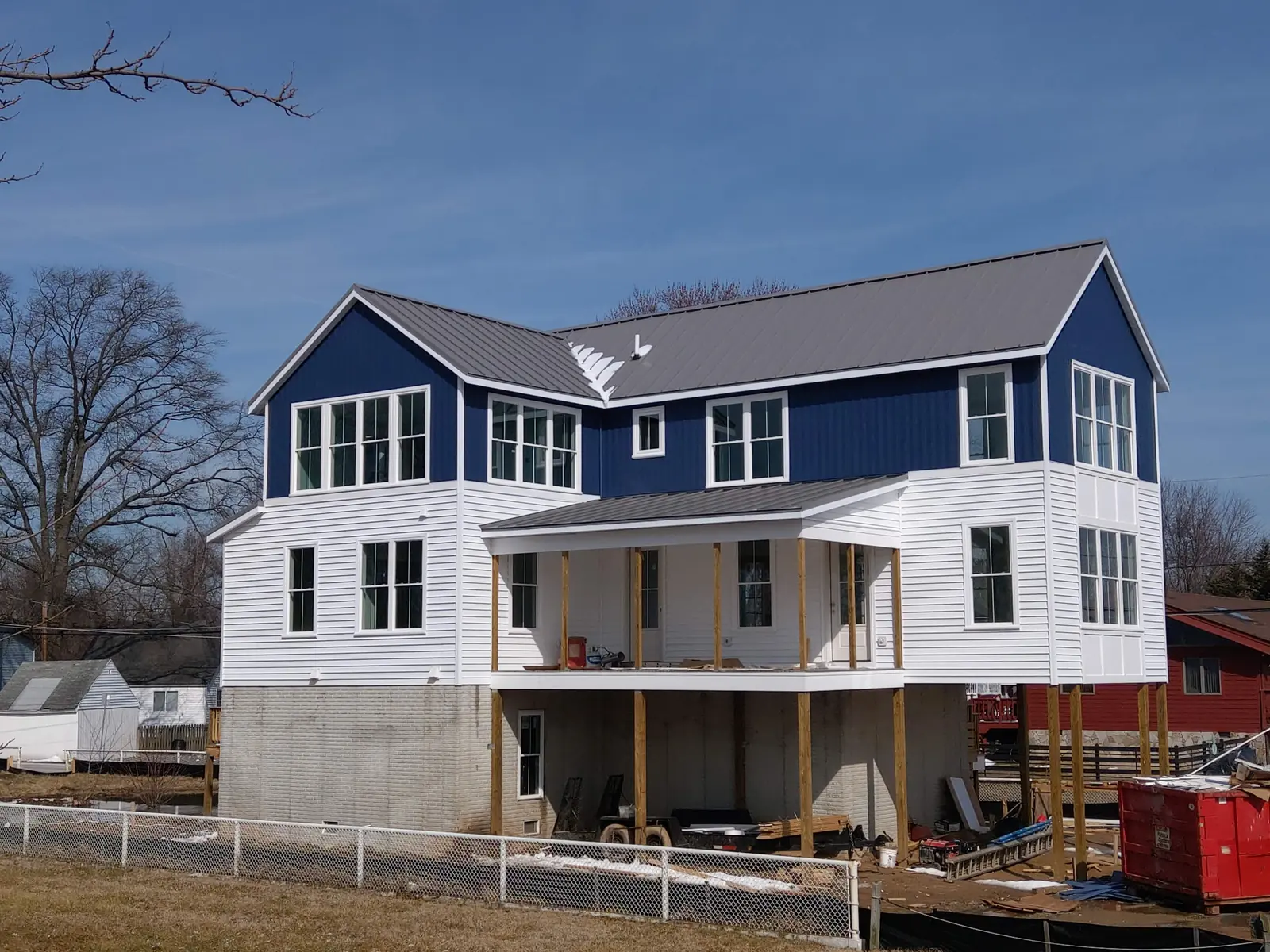
A real project that combined a standing-seam metal roof with new siding.
Siding Materials, Compared
- Vinyl siding — affordable, low-maintenance, and available in a wide range of colors. A popular default for budget-conscious homeowners who still want a clean, finished look.
- Fiber cement siding — highly durable, fire-resistant, and weatherproof. Costs more up front than vinyl but holds up better against impact and extreme weather.
- Wood siding — classic and customizable, with a timeless look that vinyl and fiber cement can’t fully replicate — but it needs more upkeep (staining/sealing) to stay protected.
- Aluminum siding — lightweight, corrosion-resistant, and low-maintenance, though it can dent more easily than fiber cement.
- Composite siding — blends materials for a balance of strength and longevity, often a middle ground between vinyl’s affordability and fiber cement’s durability.
Signs Your Siding Needs Attention
- Cracked, warped, or bowed panels — often the first visible sign of moisture getting behind the siding
- Peeling paint or bubbling wallpaper indoors, which can point to moisture intrusion through damaged siding
- Visible gaps, holes, or loose sections, especially after a storm
- Rising heating and cooling bills, which can mean your siding (and the insulation behind it) is no longer doing its job
- Mold, mildew, or a musty smell near exterior walls
Repair or Replace?
A handful of cracked or damaged panels in one area, on siding that’s otherwise in good shape, is usually a repair — we can match the color and style and patch the section. But if damage is spread across multiple walls, if the underlying sheathing has moisture damage, or if your siding is simply old enough that finding a matching replacement panel is no longer realistic, a full replacement is typically the more cost-effective choice over the long run, since it resets your home’s protection and lets you address insulation at the same time.
Not sure which situation you’re in? A free, no-obligation inspection from our team will tell you exactly what your siding needs — no pressure, no guesswork.