Storm Damage + Insurance
Storm damage can be confusing. Hernandez Roofing Pros can inspect the property, document visible roofing damage, explain recommended repairs, provide a detailed estimate, and coordinate the roofing side of the process — including with your insurance carrier, when appropriate.
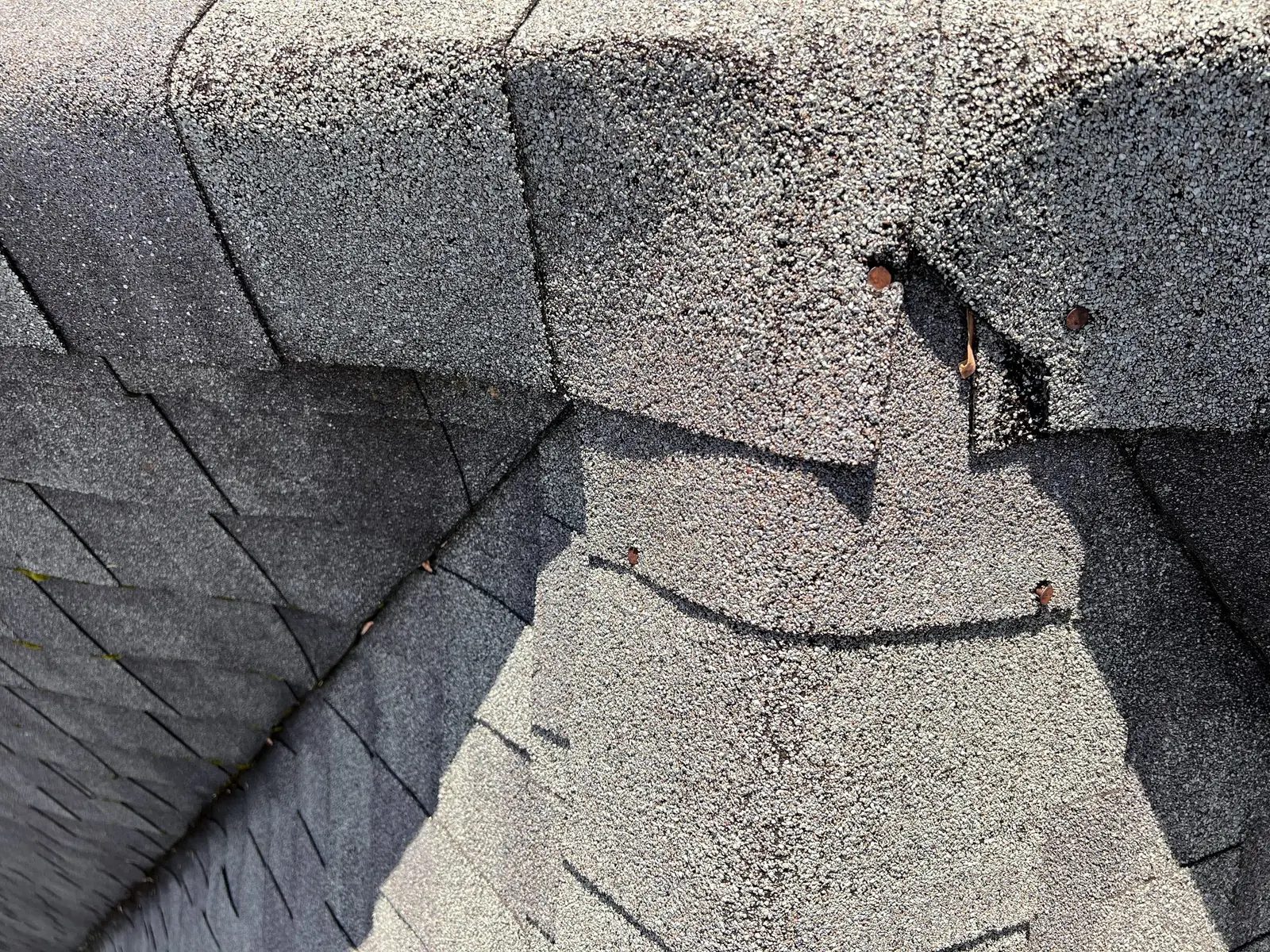
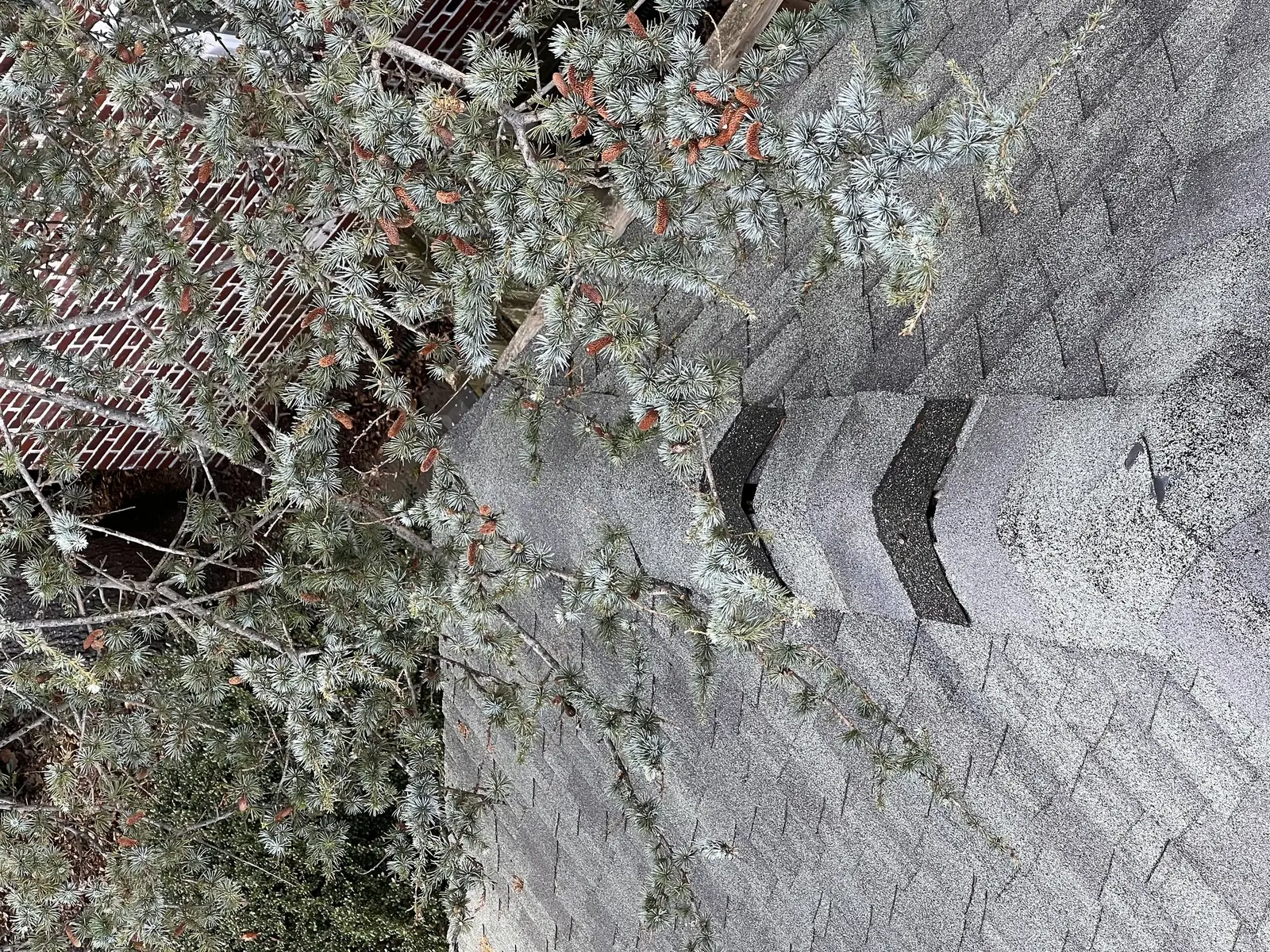
Real damage documented on inspection: torn and lifted shingles, and worn shingles where tree limbs sit against the roofline.
What Should I Do After a Storm?
- Stay safe. Do not climb onto a damaged roof.
- Look for visible damage from the ground.
- Photograph obvious exterior or interior damage when it’s safe to do so.
- Protect the property from further damage when necessary and safe.
- Schedule a professional roof inspection.
- Contact your insurance carrier if you believe you have a covered loss.
Signs of Storm Damage
Missing or Lifted Shingles
High winds can lift, crease or tear shingles, leaving your roof deck exposed — even a few missing shingles can let water in.
Hail Impact
Hail can bruise, crack or dent shingles and flashing — sometimes with no obvious sign from the ground.
Leaks & Water Intrusion
Water stains, active leaks or damp insulation are signs storm damage may already be affecting the inside of your home.
Damaged Flashing
Displaced or damaged flashing around chimneys, vents and roof edges is a common source of leaks after a storm.
Fallen Branches & Debris
Falling branches or wind-blown debris can crack, puncture or dent roofing material — sometimes with damage you won’t notice until a leak develops.
How Hernandez Roofing Pros Helps
- Inspect the roof and relevant exterior areas
- Document visible damage, with photos when appropriate
- Explain the recommended roofing repairs
- Prepare a detailed roofing estimate and scope
- Coordinate with your insurance adjuster on the roofing scope, when appropriate
- Perform the approved roofing repairs or replacement
- Document the completed work
The Insurance + Roofing Process, Simplified
-
01
Storm / Damage
The event that caused the damage.
-
02
Roof Inspection
We inspect your roof to identify what’s actually damaged.
-
03
Documentation
We document what we find with photos and notes.
-
04
Insurance Carrier / Adjuster
When appropriate, we coordinate with your carrier or adjuster on the roofing scope.
-
05
Detailed Roofing Scope
A clear, written estimate — reviewable, approvable and signable digitally, from your phone.
-
06
Repair or Replacement
Once approved, we complete the repair or replacement your roof actually needs.
-
07
Completion & Final Documentation
A documented close-out and project record, organized start to finish.
What Does Insurance Cover?
Homeowners insurance may cover certain sudden, accidental storm-related roof damage — such as qualifying wind or hail damage — depending on your policy. Coverage can vary based on:
- The cause of the damage
- Your specific policy terms and exclusions
- Your roof’s condition and age
- Your deductible
- Whether your policy is replacement-cost or actual-cash-value
- Your insurance company’s own evaluation
Coverage is determined by your insurance carrier and your policy — not by Hernandez Roofing Pros. This page is general information, not insurance or legal advice.
Repair vs. Replacement
Not every storm-damaged roof needs a full replacement. Some storm damage — like a section of lifted shingles or damaged flashing — can be repaired. More extensive or widespread damage may call for a replacement. During your inspection, we’ll tell you what your roof actually needs, based on its condition — not what’s easiest to sell.
Why Documentation Matters
Clear documentation — photos, inspection findings, a written estimate, and receipts for any temporary work — makes the roofing and insurance process easier to follow. Through our customer experience, you can access your estimate, project updates, documents and approvals digitally, including reviewing and signing from your phone.
Ready to Protect Your Home?
Get a Fast, Free Estimate Today
No pressure, no obligation — just honest advice from a licensed, insured, family-owned local crew.
Questions? We’ve Got Answers
Storm Damage & Insurance — Frequently Asked Questions
How do I know if my roof has storm damage?
Signs include missing, lifted or damaged shingles, visible dents or bruising, damaged flashing, or leaks and water stains inside your home. Some storm damage isn’t visible from the ground, which is why a professional inspection is the most reliable way to know for sure.
Should I call a roofer or my insurance company first?
Either can be a reasonable first call. A roofer can tell you what’s actually happening on your roof and provide documentation; your insurance company can explain your policy and claim process. Many homeowners do both around the same time — there’s no strict order that’s required.
Can Hernandez Roofing Pros meet with my insurance adjuster?
Yes, when appropriate. We can be present during an adjuster’s inspection to point out the roofing damage we found and answer roofing-specific questions — your insurance company still makes the coverage decision.
Does homeowners insurance always cover storm damage?
No, not automatically. Whether storm damage is covered depends on your specific policy — including your coverage type, exclusions and deductible. Your insurance company makes that determination, not us.
Will storm damage require a full roof replacement?
Not always. Many storm-related issues, like a section of lifted shingles or damaged flashing, can be repaired. More extensive or widespread damage may call for a replacement. We’ll tell you what your roof actually needs based on the inspection, not what’s easiest to sell.
What should I document after a storm?
Photos of any visible exterior damage — roof, gutters, siding — taken safely from the ground, photos of interior damage like leaks or water stains, and the date of the storm. Our inspection report and estimate add to that record.
What is a deductible?
Your deductible is the amount you’re responsible for paying before your insurance coverage applies to a claim, as set by your policy. Your insurance company or agent can confirm your specific deductible amount.
Can you make temporary repairs?
In some cases, yes — temporary protection, like covering an exposed area, can help prevent further damage while a full repair is scheduled. Ask us during your inspection whether it’s appropriate for your situation.
How long should I wait after a storm to have my roof inspected?
There’s no need to wait. Scheduling an inspection soon after a storm — even if you don’t see obvious damage — helps catch problems early, before they lead to leaks or further damage.
Serving Storm-Damaged Roofs Across the DMV
Wherever the storm hit, our local crews know the roofs, weather and codes of this region.